I put $700 a month into a 401(k) with no match, before I’d ever heard of a Roth IRA.

I’m 24, $700 a month in 401(k) plus brokerage will be fine.
I had a brokerage account, my only investment account, and I was fine with that until my new job offered a retirement plan called 401(k). I heard about it but never used it or researched it, and I had no idea what a tax-advantaged investment even meant.
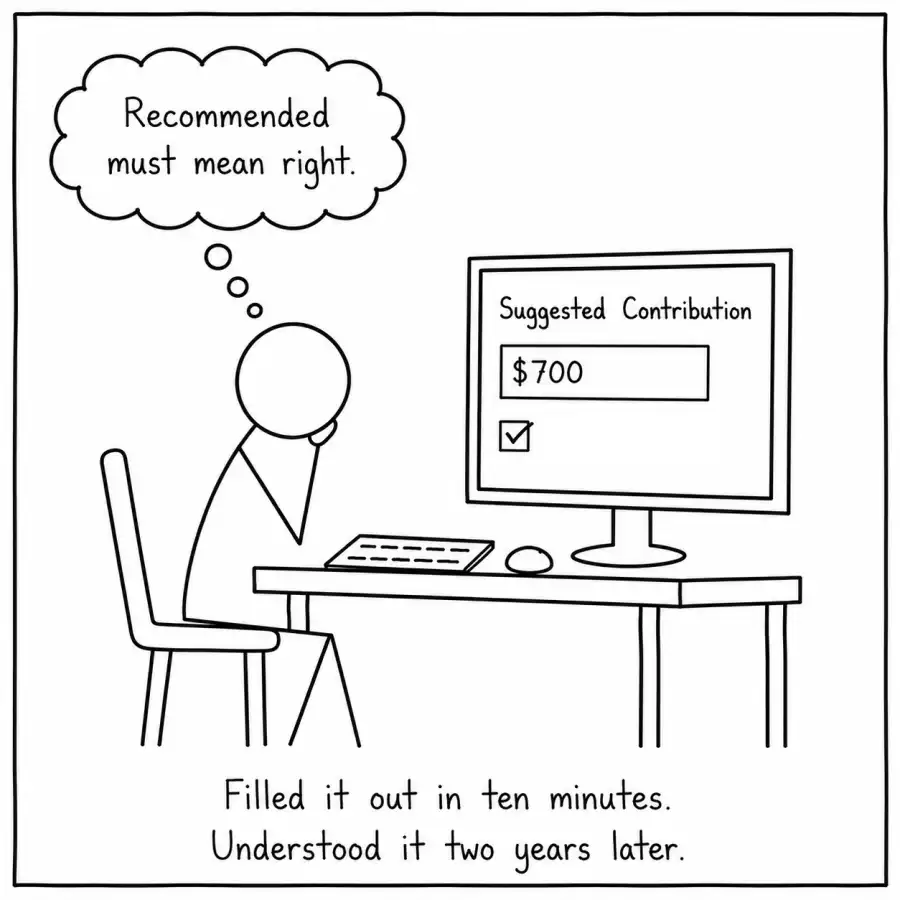
I had been investing through my brokerage account since mid 2020 and kept at it. But in 2022 I opened an employer-sponsored 401(k). I thought that would take hours of paperwork. In reality it was just entering my personal info, beneficiaries, and the amount I wanted to contribute from each paycheck. I read everything, signed, and selected the recommended amount, $700 a month, as my starter.
Once I opened it and got online access, I started searching how 401(k) and other accounts differed, and what the best strategies were. It turned out some companies matched a portion of employee contributions. Unfortunately for me, I had no such match, so everything I put in was just mine.
Over the next 2 years I kept investing $700 a month in my 401(k) and even increased my contributions a little, checking in every six months to see how it was doing. Two accounts felt like a lot at the time. If I managed both well, I’d watch green numbers grow in two places instead of one. I felt like my own hedge fund manager. Then I started to think: was that it? Was I missing other tricks? I was optimizing my accounts the same way people optimize credit card benefits, just pointed at a different goal.
I already knew my 401(k) was a tax-advantaged account. Every contribution was made before paying taxes, which reduced my taxes now. I was curious. If there was one, maybe there were more. If there were two, three, maybe five, I could be strategic about it. So I started googling my options.
One option seemed to be available to almost everyone: the Roth IRA. It was also a tax-advantaged account, but it worked differently than my 401(k). A 401(k) lowered my taxes now, while a Roth IRA used already-taxed money and grew tax-free later. If my Roth IRA generated a 20% return and I sold, that 20% wouldn’t be taxed. I applied the same research process I had used to the brokerage account, then opened my Roth IRA.
I opened it in mid 2024 and looked at the investment selection. The first thing that came to mind was, Why didn’t I research it earlier? The selection was almost exactly the same as my brokerage account, and far broader than what my 401(k) had offered. But how would I distribute my investments then?
My 401(k) helped me save on taxes now. However, it definitely didn’t have the best investment options, so I was limited. My Roth IRA, on the other hand, didn’t have those limitations. I could invest in almost anything I wanted, including individual stocks in a Roth IRA, and find cheaper options to avoid the fees I had in the 401(k). I kept investing the same amount in my 401(k), but cut my brokerage contributions a little and started putting around $40 from each paycheck into my Roth IRA, reaching $480 by the end of the year.
However, looking back from today, I feel I lost some money there. Not because I kept investing in my brokerage account, but because of how I treated my two new retirement accounts.
Supplemental or Replaceable?
To me they were supplemental or replaceable. I had no match, which meant the 401(k) wasn’t ahead of a cheaper, more flexible option. If there were a match, that would be free money, and the 401(k) would win automatically. But without one, in my case, the two weren’t competing on the same rules. The Roth IRA should have come first, the 401(k) after, until a match changes that. Both accounts have their own contribution and income limits. You can check the current 401(k) rules and Roth IRA rules before you commit.
Match or no match is the first thing to verify, not assume.
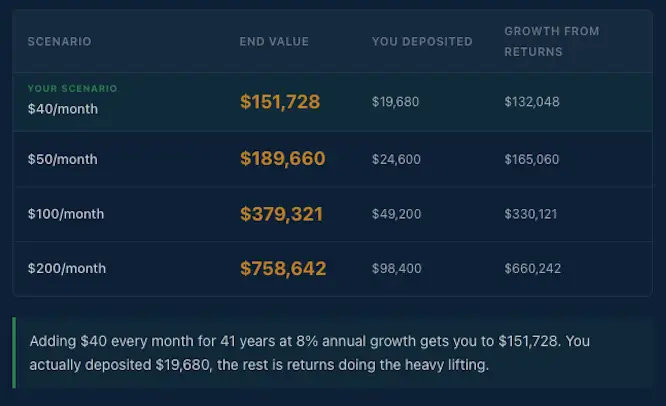
To me, not knowing this cost two years. I was curious how much tax-free money I would have if I kept investing $480 every year until retirement. I picked an 8% return over 41 years, and my end balance would be over $151k. But if I managed to max it out, same 41 years, same 8% return, it would get me over $2 million in tax-free money. You can use your numbers to calculate your tax-free growth.
One article a week. Real numbers, real mistakes, no finance bro nonsense. If you made it this far, you already know if it’s for you.
