I bet the dollar up after good jobs reports and lost. Here’s why.

Second half of 2017. I had no money to risk and no clear idea where to start. A platform with free coins felt like a safe place to start. Lose fake money, learn real lessons.
After watching a few YouTube videos explaining binary options patterns, basic strategies, and how candlestick charts worked – I started to bet. A candlestick shows price movement within a set time window – green bar means price went up, red means it went down. If the chart was going up aggressively with big tall green bars, I bet it would keep going up. If it was going down with big red bars, I bet it would keep going down. I was also using the Martingale strategy: bet 10 coins, if you win – great, if you lose – double the next bet to recover losses. Since the coins were free I burned most of them without realizing this strategy was just high-risk gambling.
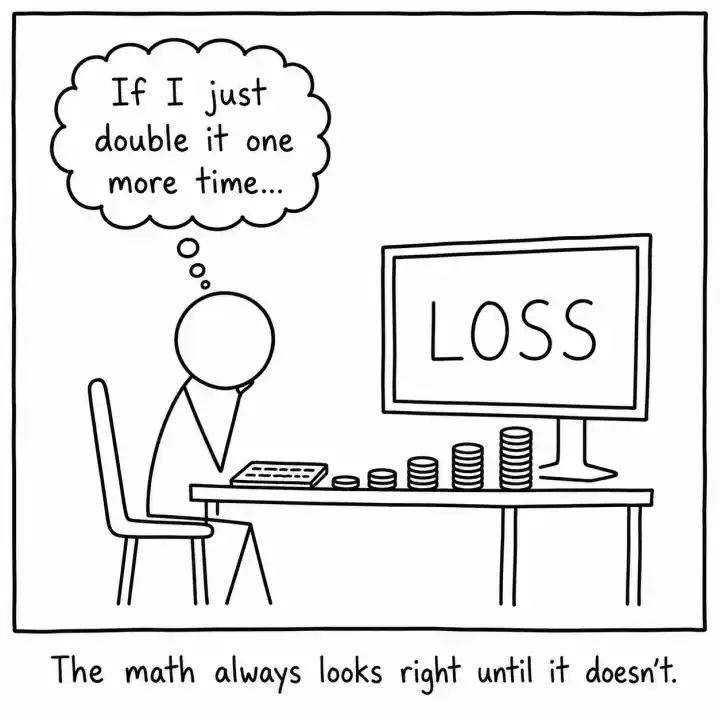
I couldn’t understand why the chart would suddenly reverse and move in the opposite direction. I kept losing coins until I got bored. It became obvious why most people lose money in binary options – it’s not a pattern, it’s a guess.
You don’t invest in charts, you invest in the reason.
I went back to what I remembered from high school economics – the Federal Reserve, the US central bank, controls interest rates to manage employment and inflation. That was a real fact I could use, not candlestick patterns on a one-minute chart.
That meant I could research upcoming Federal Reserve decisions, find what traders were expecting, and use the actual decision as a reason to bet on stronger or weaker USD. I was genuinely excited – I had a framework, not a guess. I started looking for similar sources and found two more reports worth following. I found that these reports matter most because they are fundamental – they directly affect what other traders do with their money.
Strong job report. A strong job market usually means a strong economy – more people working, more people spending. Logical. If the report came in better than traders expected, the dollar would likely strengthen and I could bet on growing USD. If it missed expectations, I could bet the other way.
Interest rates. The Federal Reserve reviews the job market and inflation and decides whether to raise, cut, or hold rates. Same logic as the job report – if the decisions matched or beat what traders expected, I could bet on this reason.
Does a good jobs report make the dollar go up?
What I figured out next changed how I looked at every report. The report itself is not the signal. What matters is whether it matched what traders expected. If it didn’t, traders would reprioritize where they put their money, which moves the currency. For example, if U.S. interest rates were expected to stay higher than in Europe or Japan, investors would move money into USD – more demand, stronger dollar. Missed expectations and USD goes the other way.
The only question I had every time was: what were traders expecting? Once I knew that, I could search for the current state. I found three sources that answered my questions. I still use them today. The Bureau of Labor Statistics at bls.gov is where the official jobs numbers are released. The Federal Reserve at federalreserve.gov has every rate decision. The most practical one I wish I had back then is investing.com economic calendar. One page with every upcoming report, what the market expects, and the actual result at the moment it’s out. No finance degree needed. If you live outside the US, the same logic applies – look for your central bank and national statistics office. The reports are different, the principle is the same.
This is how I eventually mapped this on paper, trying to understand what I was reading:
Strong economy → higher spending → inflation fear → Federal Reserve raises rates → borrowing slows → growth slows → inflation drops → Federal Reserve cuts rates → growth accelerates.
The currency on the other side of the bet
2017 was actually a great year for the USD. Strong job market, the Federal Reserve raising rates, everything was pointing in the right direction. But I kept losing anyway. The Canadian dollar was stronger than I expected. When I went looking for why, the answer was simple: Canada had the same story. With a strong job market, the Bank of Canada also raised rates. I had been looking at one side of a currency pair and ignoring the other entirely.
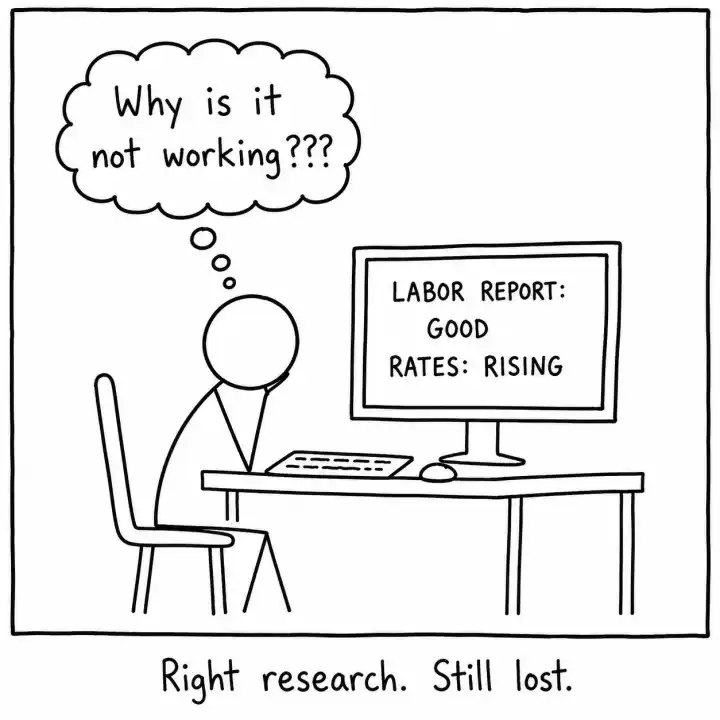
That’s the problem with short betting windows. So many things are happening simultaneously that even strong reports aren’t enough. The betting window closes before your reason plays out.
The one bet that worked in February 2018
By February 2018 the approach finally worked. The job report came out. Expected 180,000 jobs, actual 200,000 – more people working than anyone predicted. Every headline calling it a surprise. USD strengthens. I bet up. It worked. Full story here.
It took me a long time to get there, but eventually it became clear: binary options wasn’t the right tool. The research was right but a one-minute window is too short for my reason to play out. I didn’t want to gamble real money on timing. I wanted to bet on a reason and give it enough time to be right.
If I had read this back then I would have skipped two years of losing fake coins. You just saved yourself 2 years of trial and error.
One article a week. Real numbers, real mistakes, no finance bro nonsense. If you made it this far, you already know if it’s for you.

One Comment
Comments are closed.